Thanksgiving Leftovers Storage: Fridge, Freezer, and Safety
Key Takeaways
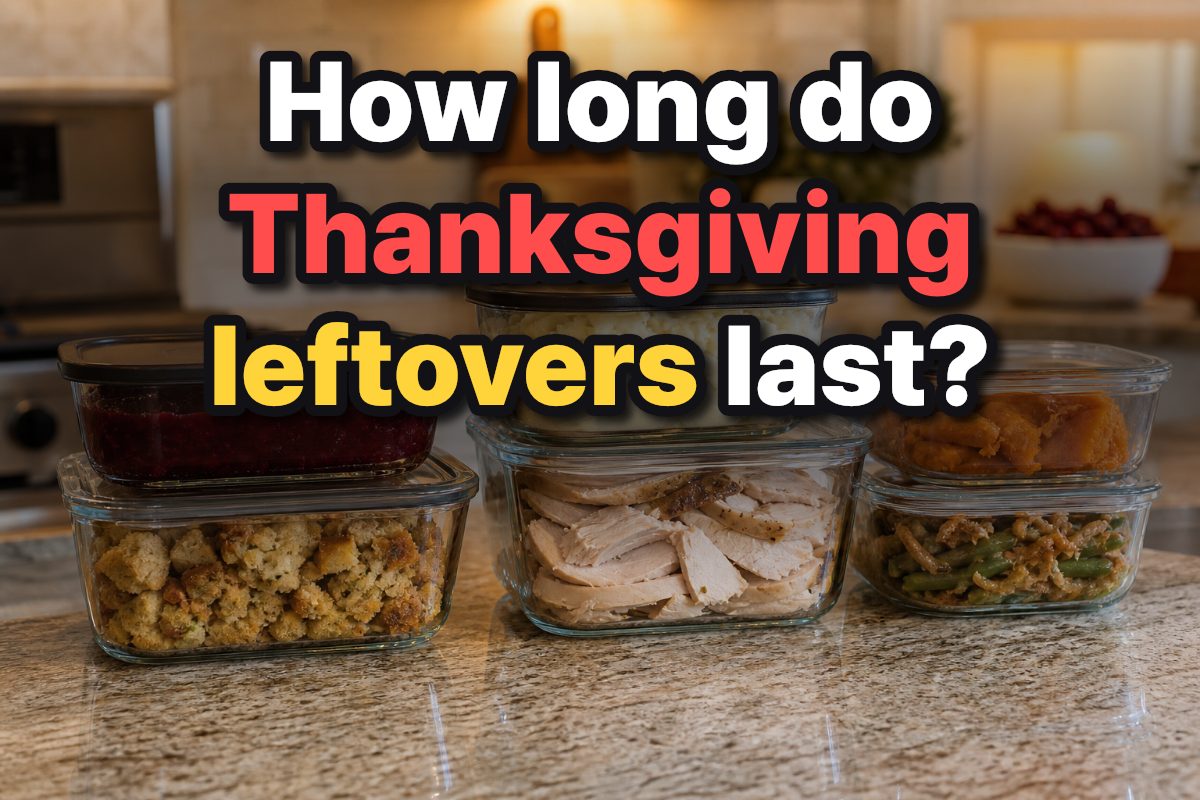
- Store most Thanksgiving leftovers in a refrigerator at 40°F (4°C) or below and eat them within 3 to 4 days.
- Refrigerate perishable food within 2 hours, or within 1 hour when the temperature is above 90°F (32°C).
- Divide large dishes into smaller, shallow containers so they cool faster.
- Freeze leftovers for longer storage; the USDA FSIS gives a best-quality window of 2 to 6 months.
- Reheat leftovers to 165°F (74°C), checking the center with a food thermometer.
Thanksgiving leftovers storage: learn fridge and freezer timelines, safe cooling and reheating steps, and how to spot spoilage without relying on smell alone.
Table of Contents
- How long do Thanksgiving leftovers last in the fridge?
- What is the two-hour rule for Thanksgiving food?
- How should you cool and store Thanksgiving leftovers?
- How do you freeze Thanksgiving leftovers safely?
- How do you reheat Thanksgiving leftovers?
- How can you tell if Thanksgiving leftovers have gone bad?
- Common Thanksgiving leftover storage mistakes
- Frequently Asked Questions
- Thanksgiving leftover storage: quick recap
Most Thanksgiving leftovers stay safe in the refrigerator for 3 to 4 days when the fridge is set at 40°F (4°C) or below. Refrigerate perishable dishes within 2 hours—or within 1 hour if the temperature is above 90°F (32°C)—and freeze food you will not eat within that window.
How long do Thanksgiving leftovers last in the fridge?
The USDA Food Safety and Inspection Service (FSIS) says Thanksgiving leftovers, including turkey, sides, and appetizers, can be refrigerated for up to 4 days. Keep the refrigerator at 40°F (4°C) or below; a refrigerator thermometer helps you check the actual temperature rather than relying on the dial setting.
The University of Maine Cooperative Extension gives a shorter refrigerator window of 1 to 2 days for gravy. Use that shorter period for gravy, and plan to eat other cooked turkey, stuffing, vegetables, and casseroles within 3 to 4 days. This distinction is useful when one leftover dish needs to be used before the rest.
| Food | Fridge | Freezer | Pantry |
|---|---|---|---|
| Cooked turkey, stuffing, vegetables, and casseroles | 3 to 4 days | 2 to 6 months for best quality | Not for storage |
| Gravy | 1 to 2 days (University of Maine Cooperative Extension) | 2 to 6 months for best quality as a Thanksgiving leftover | Not for storage |
| Pumpkin, cream, and custard pies | Refrigerate | No duration specified here | Not for storage |
| Fruit pies | Up to 5 days | No duration specified here | Up to 2 days |
The USDA FSIS says frozen Thanksgiving leftovers remain at best quality for 2 to 6 months. Freezing keeps food safe for longer when it stays frozen, but texture and flavor can decline over time, so the best-quality period is a useful planning guide rather than a reason to keep a dish indefinitely.
For a closer look at gravy’s shorter refrigerator window, see how long Thanksgiving gravy lasts in the fridge. Pie storage depends on the filling: the University of Maine Cooperative Extension advises refrigerating pumpkin, cream, and custard pies, while fruit pies can be kept at room temperature for up to 2 days or refrigerated for up to 5 days.
What is the two-hour rule for Thanksgiving food?
Put perishable food away within 2 hours of cooking or serving, or within 1 hour when the temperature is above 90°F (32°C). The USDA FSIS explains that food between 40°F and 140°F (4°C and 60°C)—the temperature range called the Danger Zone—gives illness-causing bacteria conditions in which they can grow quickly.
The time limit applies to food sitting out for a buffet or meal, not only to food that has been left untouched. Refrigeration slows bacterial growth, but it does not undo unsafe time spent in the Danger Zone. If a perishable dish has been out beyond the applicable limit, do not save it for later.
- Typical indoor meal: Refrigerate perishable leftovers within 2 hours.
- Hot setting above 90°F (32°C): Refrigerate within 1 hour.
- Food held hot: The USDA FSIS says the 2-hour rule applies when food is not being held above 140°F (60°C).
How should you cool and store Thanksgiving leftovers?
Divide large quantities into smaller portions and place them in covered, shallow containers. The USDA FSIS recommends this approach because smaller portions cool more quickly than a whole turkey or a deep pot of stuffing, reducing the time food spends warm.
- Separate the food. Carve turkey and portion stuffing, vegetables, and casseroles instead of storing them in one large dish.
- Use shallow containers. A shallower layer lets heat escape from the center more efficiently than a deep container.
- Cover and refrigerate or freeze promptly. Do not leave food on the counter until it has cooled completely.
- Keep dishes identifiable. Labeling containers with the food and storage date makes it easier to use the oldest portions first and stay within the recommended window.
Keep containers covered and leave space around them so cold air can circulate. The University of Maine Cooperative Extension also recommends storing turkey, stuffing, vegetables, casseroles, gravy, and pies in individual airtight containers; separating dishes helps prevent cross-contamination and lets them cool more evenly.
Warm food can go into the refrigerator in shallow portions; there is no need to wait for a large dish to reach room temperature on the counter. For more detail on that common question, read whether you can put hot Thanksgiving leftovers straight in the fridge.
How do you freeze Thanksgiving leftovers safely?
Freeze food you will not use during its refrigerator storage window, and pack it in covered, airtight containers. The USDA FSIS says frozen Thanksgiving leftovers are best quality for 2 to 6 months. Freezing slows bacterial growth while food remains frozen, but it does not preserve peak flavor and texture forever.
Freeze meal-sized portions rather than one oversized container. Smaller packages are easier to thaw only as much as you need, and they reduce the temptation to thaw a large batch and then keep it in the refrigerator too long. Mark the contents and date on the package so you can choose older portions first.
If you are deciding how to use a dish, use the refrigerator timeline as your first guide: keep it refrigerated only within its recommended window, or freeze it promptly for later. The freezer time is a best-quality range, not a separate permission to leave food at room temperature before freezing.
How do you reheat Thanksgiving leftovers?
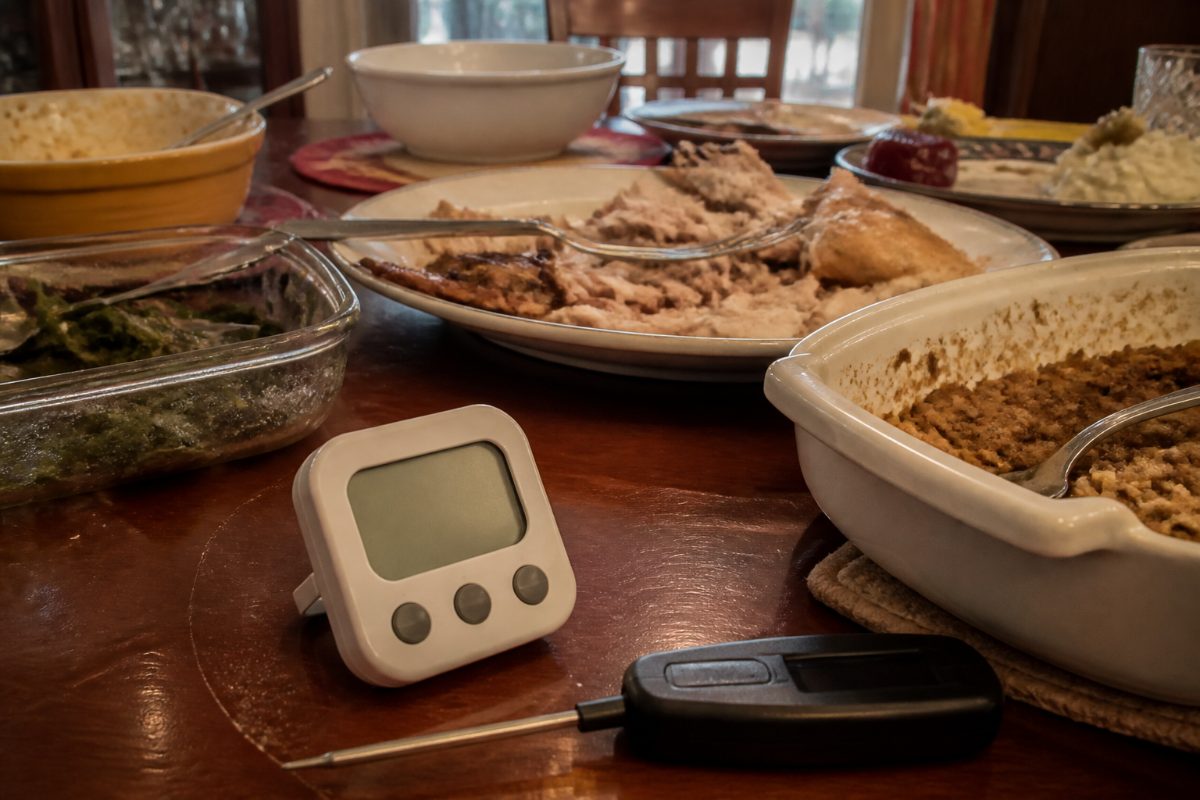
Reheat leftovers to an internal temperature of 165°F (74°C). The safe target applies to the center of the food, so use a clean food thermometer and check the thickest portion rather than judging by steam or a hot surface.
Microwaves can heat unevenly. Cover the dish, stir or rotate food during reheating when practical, and check more than one spot for temperature, especially in a dense casserole or a large serving. For gravy and other liquid dishes, stir as they heat so the temperature is more even throughout.
Reheating is not a way to reset the storage clock or make food safe after it has sat out too long. Start with leftovers that were cooled and stored within the recommended time limits, then bring them to 165°F (74°C) before serving.
How can you tell if Thanksgiving leftovers have gone bad?
Discard leftovers that have an unusual sour or unpleasant odor, a slimy or sticky surface, or visible mold. These changes can indicate spoilage, but their absence does not prove that food is safe: some harmful bacteria do not cause visible changes, an off smell, or a change in texture.
Use storage time and temperature alongside your senses. If cooked leftovers have been refrigerated longer than the recommended window, appearance and smell cannot confirm safety. Likewise, food that exceeded the 2-hour limit—or the 1-hour limit above 90°F (32°C)—should not be kept just because it still looks normal.
- Look: Discard food with visible mold or other unexpected changes.
- Smell: An off odor is a reason to discard, but a normal smell is not a safety test.
- Feel: A slimy or sticky texture is a spoilage warning; do not taste food to test it.
- Check its history: Consider how long it sat out and how many days it has been refrigerated.
Common Thanksgiving leftover storage mistakes
Several small planning choices make it easier to stay within safe storage limits. The most common problems are leaving food out during cleanup, storing a whole turkey or a deep casserole, and treating a normal appearance as proof that food is safe.
| Situation | Safer approach |
|---|---|
| A whole turkey or a large casserole is still on the counter | Divide it into smaller portions and refrigerate within the time limit. |
| You plan to eat everything later in the week | Refrigerate what you will eat within its storage window and freeze the rest promptly. |
| Leftovers smell and look normal after several days | Use the refrigerator timeline; smell and appearance cannot rule out harmful bacteria. |
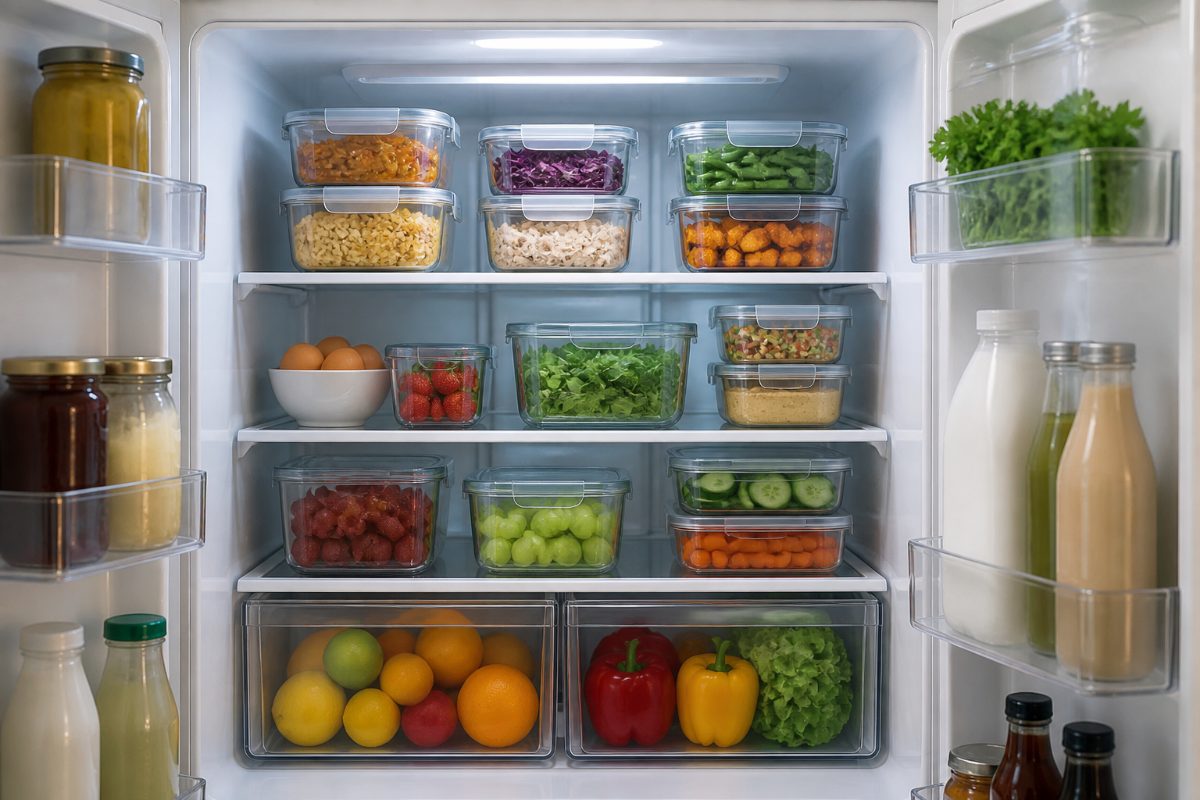
| The refrigerator is crowded with containers | Arrange containers to leave space for air circulation and check that the fridge is at 40°F (4°C) or below. |
If you are checking refrigerator settings before the holiday meal, see the recommended fridge temperature for Thanksgiving food. A thermometer reading gives you a clearer check than relying on a numbered control alone.
Frequently Asked Questions
How long can cooked turkey stay in the fridge?
The USDA FSIS says Thanksgiving leftovers, including cooked turkey, can be refrigerated for up to 4 days. Keep the refrigerator at 40°F (4°C) or below and store the turkey promptly in covered, shallow portions.
Can I refrigerate Thanksgiving food while it is still warm?
Yes. Divide it into smaller, shallow containers and refrigerate it promptly instead of leaving it out to cool completely. Smaller portions release heat faster than a deep pot or whole turkey.
How long does Thanksgiving gravy last in the fridge?
The University of Maine Cooperative Extension recommends using gravy within 1 to 2 days. Store it promptly in a covered container, and reheat it thoroughly before serving.
How long can I keep Thanksgiving leftovers in the freezer?
The USDA FSIS gives a best-quality window of 2 to 6 months for frozen Thanksgiving leftovers. Food kept frozen remains safe longer, but quality can decline over time.
Can I eat leftovers if they smell fine after four days?
A normal smell does not show that leftovers are safe, because some harmful bacteria cause no noticeable change. Follow the recommended refrigerator time and discard food that has been stored beyond that window.
Thanksgiving leftover storage: quick recap
- Keep the refrigerator at 40°F (4°C) or below.
- Eat most cooked Thanksgiving leftovers within 3 to 4 days; use gravy within 1 to 2 days.
- Refrigerate perishable food within 2 hours, or within 1 hour above 90°F (32°C).
- Use shallow containers to cool portions quickly and freeze food you will not eat soon.
- Reheat leftovers to 165°F (74°C), and do not rely on smell or appearance alone to judge safety.
Storage recommendations and holiday food handling details can change. For current USDA guidance, consult the USDA FSIS page “Your Safe Thanksgiving Guide.”
References
- Ultimate Turkey FAQ for a Safe, Juicy Thanksgiving
- Your Safe Thanksgiving Guide | Food Safety and Inspection Service
- Tips for safely storing Thanksgiving leftovers - UMaine News - The University of Maine
- How Long Should You Keep Thanksgiving Leftovers? - Health BeatHealth Beat
- Thanksgiving Leftovers for Safe Keeping, Weekend Grazing | FoodSafety.gov
- Turkey Basics: Handling Cooked Dinners | Food Safety and Inspection Service
- Thanksgiving Leftovers: USDA Guidelines for Safe Storage and Reheating - Global Food Consumers Forum
- ABC15 Arizona - USDA says turkey and other holiday...
- It Might Be Time to Toss Your Thanksgiving Leftovers - CNET
- Food Safety Guide for Thanksgiving
Information in this post was checked as of October 2026. Policies and prices may change, so please verify important details with official sources.


Comments
Post a Comment